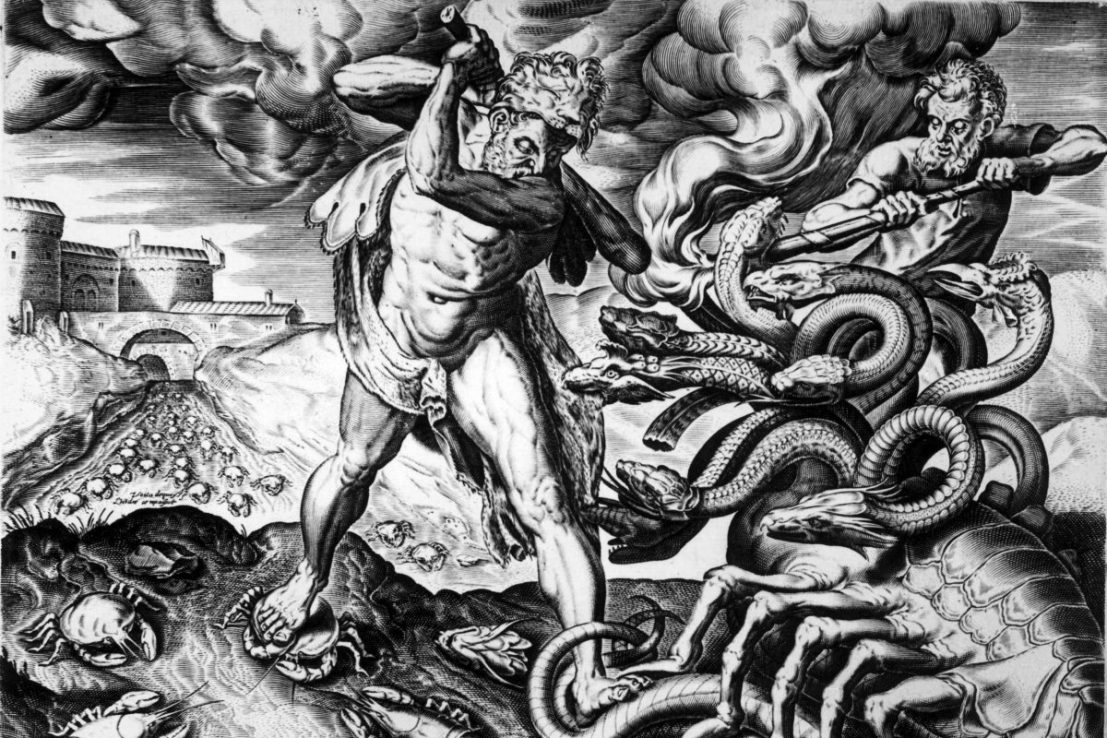
Super-heroine Rachel Reeves is in battle with a mythical beast that keeps multiplying, and the OBR won’t help her, writes Paul Ormerod
When Rachel Reeves became Chancellor in July 2024, she announced that her tenure would be the most pro-growth “in our country’s history”. A key part of this strategy was to persuade the financial markets that everything would be safe and secure under Labour.
In early August that year the Treasury published a document entitled “Fixing the Foundations” which pronounced that the fiscal framework would be strengthened “to ensure the £22bn “black hole” in the public finances never happens again”.
We might usefully note that this mythical beast the Black Hole seems to have the qualities of the Hydra. No sooner has our super-heroine Rachel chopped off the head labelled £22bn than even bigger ones spring up.
Reeves eulogised the role of the Office for Budget Responsibility (OBR) in achieving financial stability. She legislated that no government could announce fiscally significant measures without being subject to an independent assessment by the OBR.
Now of course, Labour’s attitude towards the OBR has rather altered.
The Chancellor announced last week that its powers of scrutiny will be reduced. Instead of producing a minimum of two independent assessments a year of the public finances and the economy, the OBR will now be restricted to just one.
But the distinguished economists at the OBR appear to have created a major headache for the Chancellor in advance of her major policy statement due on 26 November.
We have to wait until then for formal confirmation, but it is widely trailed in the media that the OBR is downgrading its forecasts for productivity growth in the economy.
Don’t blame the messenger
It is a matter of public record that for the best part of a decade the OBR has been far too optimistic in its productivity projections. Despite efforts to scale these back, the actual output has consistently been lower.
By the rules she herself created, this reduction in forecast growth rates boxes the Chancellor into a corner. Lower productivity growth means lower economic growth. And lower economic growth means less receipts from taxation, which in turn means a higher budget deficit.
In short, a bigger black hole.
The heavily signalled intention of the OBR to reduce its productivity growth forecasts has led to criticism from political quarters.
Labour MPs had already become very restive about the direction of economic policy and increasingly inclined to disparage the OBR.
It now seems to have reached a new level, with John Trickett MP, articulating the views of many, proclaiming that it is “odd” that the OBR has waited for a Labour government before downgrading its projections.
In the Soviet Union under Stalin, it rapidly became clear that the first Five Year Plan was not ushering in unparalleled prosperity. Living standards, already very low, fell abysmally. Naturally, this was not the fault of the Plan. A group of leading engineers was put on show trial and labelled as “wreckers”.
It seems as if the OBR is being set up to play this same “wrecking” role. Fortunately for its members, the rule of law prevents them from meeting the same fate as the unfortunate Soviet experts, namely being shot.
The OBR’s forecasts have often been wrong. But this is simply a fact of life which all economic forecasters have to live with.
In all of this the OBR is simply the messenger conveying the news. The plain facts are that growth in both output and productivity has been shockingly low since July 2024. What has grown are the problems of the public finances and of funding public services at their current levels.
The government can in fairness point to a difficult world environment. And the situation they inherited was not ideal. But they cannot escape the blame for the failure of their own policies.
Paul Ormerod is an honorary professor at the Alliance Business School at the University of Manchester and an economist at Volterra Partners LLP