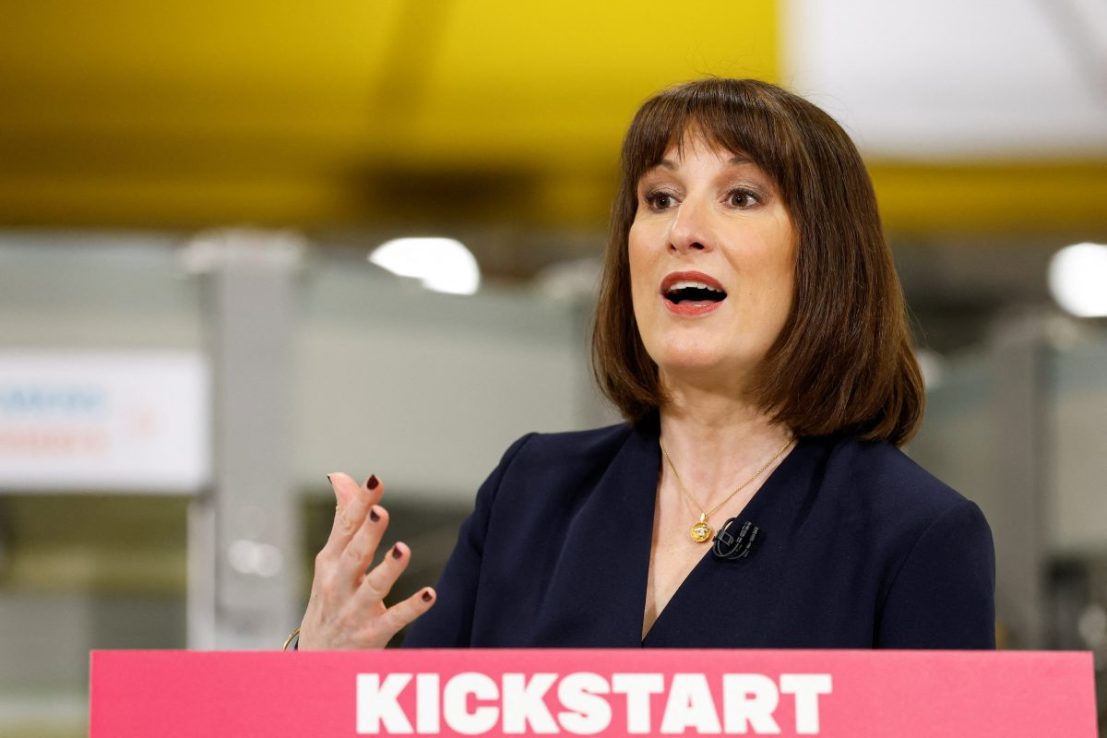
The Office for Budget Responsibility (OBR) has handed Chancellor Rachel Reeves its first evaluation of the state of the UK economy and crippled public finances, setting policy discussions about likely £30bn tax rises and possible savings in motion.
The OBR’s Budget Responsibility Committee, which consists of the economists Richard Hughes, David Miles and Tom Josephs, are expected to warn the Chancellor that the UK’s outlook is significantly worse than assumed in March.
Its downgrades for productivity and revisions on calculations for supply-side effects of policy are expected to contribute to a £30bn hole in public finances.
Higher debt interest payments – due to 30-year gilt yields rising by over 40 basis points since the last Autumn Budget – and U-turns on welfare savings made at the Spring Statement are likely to add to costs faced by Reeves.
In a report published in July, the OBR said it had overestimated growth forecasts by 0.7 percentage points over a five-year horizon and underestimated borrowing by as much as 3.1 per cent of GDP.
It said turbulence in the global economy in the last few years had added greater uncertainty to its forecasts but the signs suggest the OBR will take a harsher view of the future of UK growth.
Labour MPs criticise OBR
In previous years, the OBR has re-evaluated its inflation measurements and considered changes to the effect of public investment on output in the economy.
But Labour MPs have now widely decried the fiscal watchdog’s decision to alter modelling of its productivity forecasts.
Labour Growth Group’s Chris Curtis suggested at a fringe event at the Labour Party conference that the OBR had chosen to do productivity changes now, as opposed to doing them when Jeremy Hunt was Chancellor, for “political reasons”.
The sense of angst felt across the Labour Party – whether it is due to what some perceive to be the OBR’s outsized powers or whether politicians hold some grievances against its procedural approach – is partly shared by Reeves and Prime Minister Keir Starmer.
In an interview with The Times last week, Reeves said: “They are choosing this moment to make those revisions. That’s a challenge for me.
“But I’m not going to duck that challenge. I will respond to it because it is important that I can give that confidence that we’ll continue to provide economic stability.”
Reeves has also said she will tweak fiscal rules to make the OBR publish just one fiscal forecast a year.
Earlier this year, Starmer also blamed the fiscal watchdog for not taking account of the impact of wider welfare reforms on the future of public finances.
The OBR only considered £5bn trimmings to the welfare budget made by Labour in the hours before the Spring Statement rather than wider impacts on the jobs market.
The majority of those reforms have since been reversed after a huge backbencher rebellion put a bill on changes to personal independence payments (Pips) on ice and added pressure on the government’s ability to push through changes to the welfare system.
“On the impact assessments, it is significant to my mind that the ability of any policy or legislation to change any behaviour at all is not priced in, in other words the OBR has scored nothing against any change here,” Starmer told MPs in April.
“The assumption is [that] not a single person changes their behaviour. I personally struggle with that way of looking at it because I do think that these measures will make a material difference and they need to make a material difference.”
OBR forecasts trump City projections
But policymakers may be concerned about the OBR’s short-term growth forecasts given it is set wide apart from those provided by independent economists.
While the OBR believes growth will be 1.9 per cent in 2026, City forecasters monitored by the Treasury in monthly publications indicate growth will be just 1.1 per cent next year.
Economists at Allianz Trade also said the UK’s growth would be 0.9 per cent on Friday.
The other hazards facing Reeves and Starmer lie in Labour’s own policymaking over the last six months.
The OBR did not score the effects of the government’s Employment Rights Bill given it was still stuck in parliament but it indicated that workers’ rights reforms would have a “net negative effect” on growth, with clearer figures on the costs likely to emerge.
Reports suggesting the two-child benefit cap will be lifted via a tapered system will also likely add billions of pounds to costs.
In what may be more worrying for the Treasury, the OBR may take another look at the planning bill which is still passing through parliament after it was watered down for some environmental protections.
At the Spring Statement, OBR chiefs upgraded growth forecasts for the years after 2025 on the basis it would allow the construction sector to boom.
Ministers have said that fresh legislation to liberalise the planning system further could be introduced within weeks. Keir Starmer has appointed a Conservative peer, Charles Banner, to write a new planning bill that stops judicial reviews blocking major infrastructure projects.
The new bill may lead to the UK leaving an international treaty that protects campaigners’ rights to bring legal claims against significant projects, according to The Guardian.
Analysts may also have to weigh the effects of sweeping immigration reforms made by Labour, though the full decision on the extension to the waiting time to gain indefinite leave to remain (ILR) rights has not been confirmed by officials.
Rachel Reeves lobbies OBR on growth
Labour may hope that some of its growth-focused policies introduced in the last six months can offset some of the downside risks facing the UK economy.
The UK’s free trade agreement with India will boost UK GDP by £4.8bn every year “in the long run”, according to internal government analysis, while a deal struck with the US reducing tariff rates may ease export pressures for British businesses.
A trade deal easing red tape around food trade with the EU, which will take around a year to come into effect, could also boost the UK economy.
Reeves has also publicly argued that a youth mobility scheme for 50,000 young Europeans to travel into the UK should be “scored” by the OBR as a positive policy.
Further announcements on pension fund investment around the “Leeds Reforms” and Mansion House Accord, business immigration policies as well as a pledge to reduce energy costs for 7,000 firms may also be considered by the OBR later this year but they may not dramatically reduce the size of the shortfall.
There have been wider debates about whether dilemmas Reeves is facing are of her own making.
Rachel Reeves warned taxes will not fix public finances
Within hours of the Spring Statement being delivered, economists at Jefferies and the Institute for Fiscal Studies (IFS) predicted she would have to raise taxes again at the Budget due to the size of her £9.9bn headroom, the third smallest left by any Chancellor since the OBR was set up in 2010.
Analysts at Goldman Sachs and Berenberg have warned the Chancellor that raising taxes could risk worsening the state of the UK’s public finances.
They have warned that poorly-designed tax hikes could keep inflation high and thereby prevent further interest rate cuts being made by the Bank of England, which would help to reduce borrowing costs worth more than double the size of the defence budget.
UK growth would also be damaged from higher taxes on households and firms, economists have also argued.
Last year’s £40bn tax raid, largely through hiking employers’ national insurance contributions (NICs), has played a part in nearly 300,000 jobs being lost in ten months and setting the UK up to have the highest inflation in the G7 this year, per OECD forecasts.
While Starmer and government officials have recognised that the first Labour Budget took a toll on businesses, they have also said the UK economy faced a “difficult” road ahead with more troubling decisions to come.
The Treasury is reportedly looking at raising taxes on everything from pension pots to dividends.
It could also move to make pro-growth tax reform, with incoming changes to business rates being designed to boost investment and discussions being held to make the stamp duty a tax paid through installments rather than via a lump sum at the point of purchase.
But widely mooted levies on gambling firms could backfire. The OBR said in its July report that it frequently “overestimated” receipts from excise taxes, suggesting that it could take a dimmer view of any effort to raise significant revenue from “sin taxes”.
A Treasury spokesperson said: “We don’t comment on speculation. The OBR have been commissioned for a full economic and fiscal forecast that will be published on 26 November.
“As the Chancellor has made clear, Britain’s economy isn’t broken, but it does feel stuck. That’s why we will continue to invest in Britain’s renewal, to build an economy that works for working people.’”