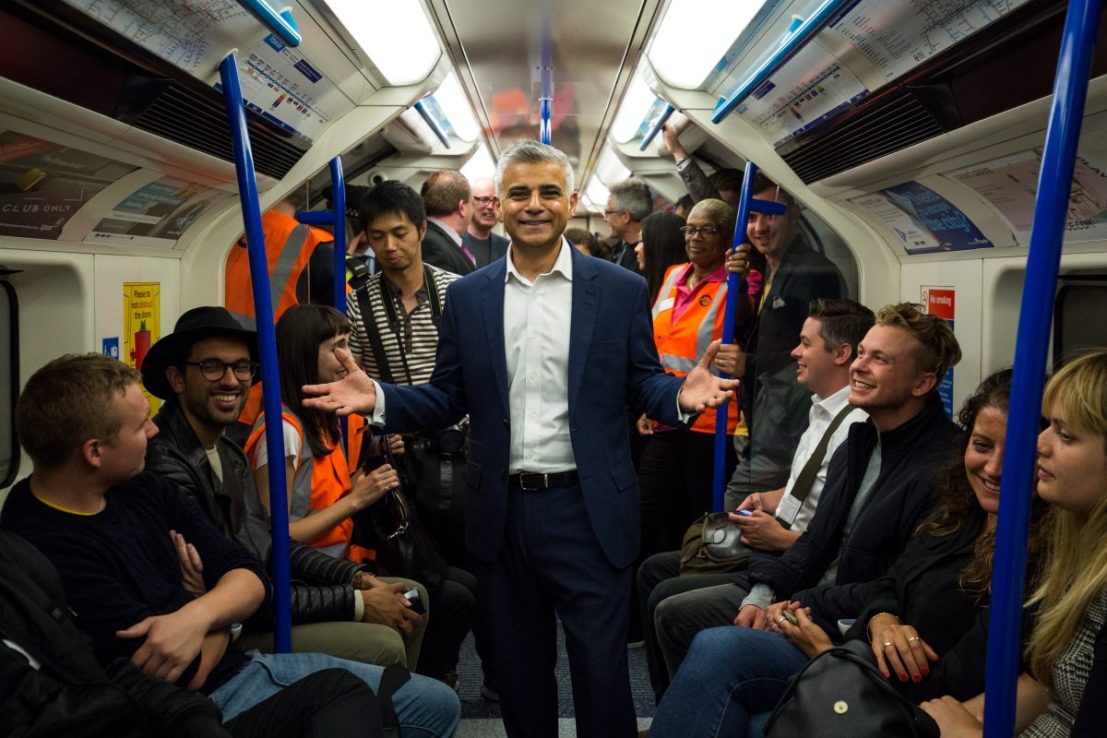
Sadiq Khan promised there would be no Tube strikes under his mayoralty. So where is he now, asks James Ford
Do you remember when Sadiq Khan promised that there would be no Tube strikes under his mayoralty? As they stand in long queues at bus stops or fork out large sums in Uber surge fares, the Mayor probably hopes Londoners don’t. Like his pledge to never build on greenbelt land, it is a promise that has aged poorly. We should not be surprised, then, that Sadiq Khan has been largely invisible this week as strikes have shut down London’s tube network and crippled the capital’s economy. Our Mayor is not a fan of accountability at the best of times and never leads from the front during a crisis. Face an angry crowd of commuters or answer awkward questions from the press? That is a job for your generously remunerated deputy mayors and your bloated bureaucracy of transport officials. Sadiq Khan is the epitome of a fair-weather Mayor.
Rather than deliver the strike-fee transport network that he promised, the Khan years have witnessed the highest rates of industrial action in TfL’s history. In fact, by March 2023 (when the last major strikes shut down the entire Tube network), the current Mayor had presided over nearly triple the number of strike days (a staggering 139) as both of his predecessors combined. It is tempting to blame the RMT alone for the disruption and misery caused this week. Certainly, their leaders are shameless and opportunistic and the membership greedy and lazy. However, ‘more money for less work’ is the mantra of any union and the raison d’etre for trade unionism generally. Can we really criticise the grasping brothers of the RMT when experience has shown that City Hall will always cave when pushed? As Rudyard Kipling noted: “once you have paid him the Danegeld/ You never get rid of the Dane.”
Khan has made strikes more likely, not less
Sadiq Khan’s actions as Mayor (and as chair of TfL) have made strikes more likely not less. Since the Covid pandemic, Tube workers have seen their pay grow by a whopping 25 per cent yet none of these generous settlements have come with strings attached like agreeing a no-strike deal nor have pay increases been linked to improvements in productivity or in sacrificing other benefits.
Then unions threatened strike action in January 2024, the Mayor intervened over the heads of his transport officials to agree on a £30m pay deal (it was an election year, after all). Later in 2024, when Tube staff again threatened to strike, they got a four-day working week. The Mayor has also further weakened TfL’s hand in future negotiations by opposing the last government’s anti-strike legislation and by very publicly dropping plans to increase driverless operations on the underground network. How else was the RMT meant to interpret all this but as City Hall waving a huge white flag?
The great tragedy of Tube strike arithmetic is that Londoners end up paying the price whether they are avoided or not. The Centre for Economic and Business Research (CEBR) has estimated that this week’s strikes will cost the London economy £230m in lost business. But, if the RMT had received their Danegeld and called off the strike action, Londoners would be left facing a stark choice; even larger fare rises than the 5.8 per cent that is already planned or less investment in new services and infrastructure improvements across the network.
These latest crippling strikes – and the current Mayor’s dreadful record on preventing industrial action on the transport network generally – will only serve to make industrial relations at TfL into more of an election issue in 2028 and beyond. It seems likely that, in vying to replace a Mayor that has been weak when facing off against the RMT, mayoral hopefuls from many parties are likely to take a tougher line on Tube pay and staff benefits. The more ambitious candidates may well turn again to the unions’ nightmare scenario: a driverless Tube. Whilst undoubtedly expensive to introduce, a future Mayor may even decide that it is preferable to invest in a more resilient automated Tube network than to contend with being held to ransom annually by the RMT. Lazy Tube workers may have been winning under Khan, but they should expect a much tougher battle from the next incumbent of City Hall. Indeed, voters should demand it.
James Ford was an adviser on transport policy to Mayor of London Boris Johnson