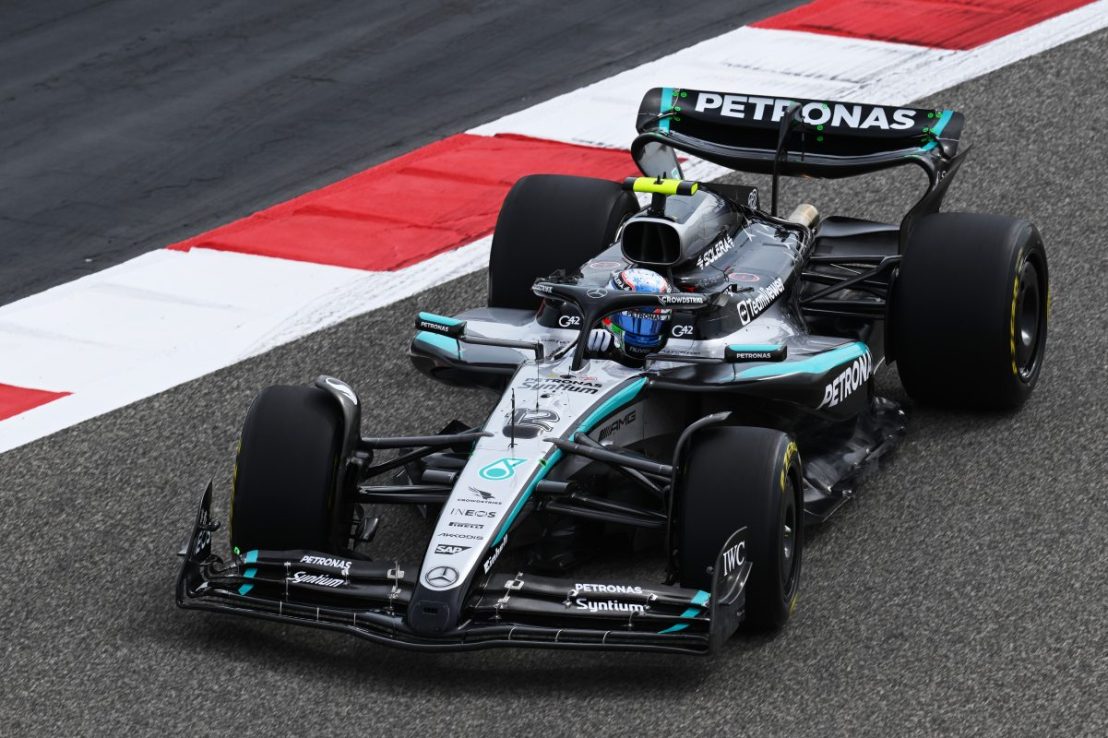
Mercedes CFO Russell Braithwaite on maintaining profitability in Formula 1 amid cost cap changes and how the team’s partnership with SAP will help.
Formula 1’s cost cap has helped to herald a new era of profitability, with strict limits on spending allowing teams to generate a surplus from the sport’s explosion in popularity around the world over the past decade.
But amid the many changes looming next season is a steep hike in the cost cap from $135m a year to $215m. So are profits such as Mercedes’ record £120m in 2024 sustainable? The answer is an emphatic yes, says the team’s chief financial officer, Russell Braithwaite.
“It is [sustainable], for a couple of reasons. First of all, because our business model should allow for us to continue with profitable growth,” Braithwaite tells City AM.
“But more importantly, I think this cost cap change, you need to look under the headlines, because yes, the number goes to $215m, which sounds like a very big increase, but it’s an evolution of the rules and a different set of included and excluded costs.
“What you actually find is a number of costs that existed already are now becoming included. Depreciation is a good example. We’ve always had depreciation, it just wasn’t included before. So that doesn’t make any difference to our profitability.
“When you adjust it out and look at depreciation, R&D tax credits and the different sorts of things that moved around, you neutralise those things. In general, it’s mostly an inflationary increase – a little bit more – but the cost cap change doesn’t impact our profitability.
“Other decisions will change our profitability, like, what is our driver line-up in the future? Or do we retain sponsors and more or less of them? But the cost cap itself is fairly stable in that regard.”
How SAP will help Mercedes keep to cost cap
Mercedes have another tool at their disposal to optimise budgets: AI-powered, real-time analysis enabled by their partnership with SAP, which Braithwaite believes will make them “faster and more efficient” in, for instance, managing inventory.
“Prior to the cost cap [which began in 2021], we spent more than the cost cap. So we always want to be spending what’s available for performance in the belief that there’s lap time behind all of those dollars,” he says.
“We need to be as precise as we can so that we can go as close to that edge as possible, but making sure we stay on the right side of it. So we need that real-time analysis and data and for it to be accurate. That’s what we think we get from this advancement in the SAP tool.”
Mercedes’ position as one of the top four teams on the grid – they are currently a close third in the constructors’ standings – should ensure they remain among the best-funded outfits. The arrival of Cadillac in 2026 will see everyone get a smaller slice of the F1 pie and provide extra competition for sponsors, although Braithwaite is relaxed about the immediate impact.
“Let’s see how it pans out, but we don’t see them as a direct competitor, that 11th team, in the short term,” he says. “Obviously there’s now 11 teams for what was 10 team sponsorships and prize fund, so we have to be very cautious of the top line, which is a different topic. But we’re not overly concerned. We think it’s good for the sport that that brand comes in.
“We’re in very strong relationships with all of our key sponsors, and we’re not concerned about that at all in the short term. But I guess in the long term, yeah, we have a number of American sponsors. They’re [Cadillac] American. We have to keep an eye on that, but we’re not at all concerned about that. We think there’s room for everybody in the sport.”