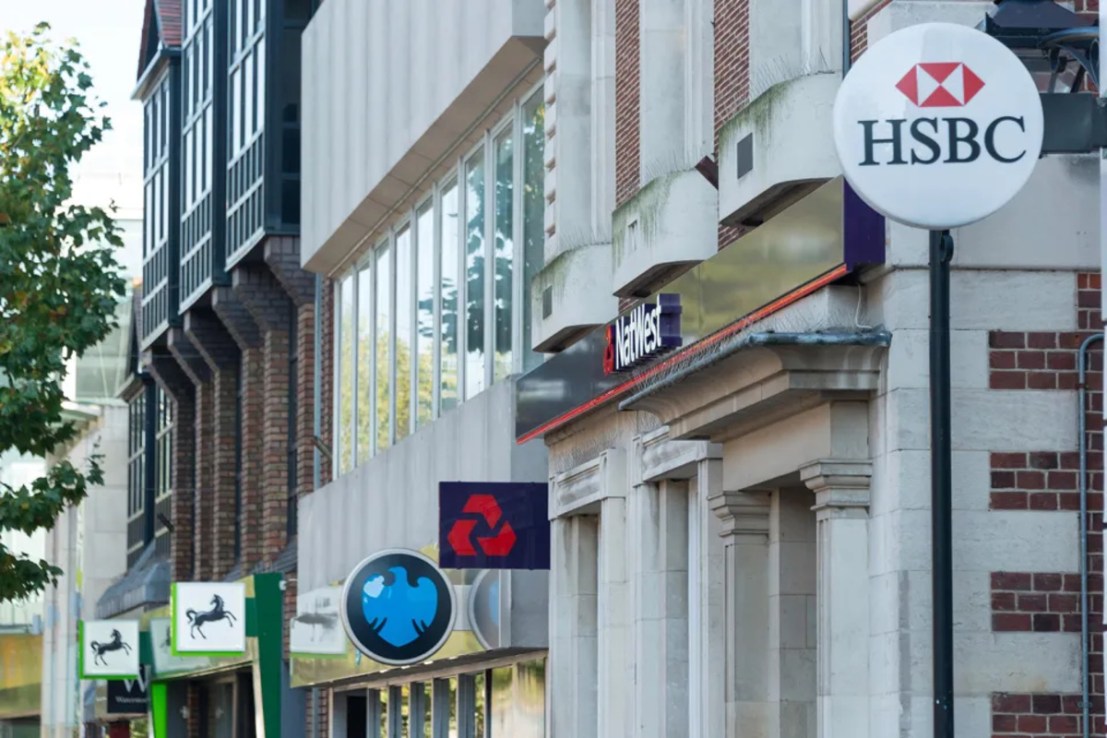
The FTSE 100’s banking constituents breezed through the second quarter results season as interest income remained stable and trading income soared on the back of market volatility.
The ‘Big Five’ banks of London’s flagship stock index – Barclays, HSBC, Natwest, Lloyds and Standard Chartered – pocketed a combined £12.8bn in the three months to June 30.
Though the period was not without its dramas with HSBC forced to set aside $2.1bn (£1.58) in write-downs.
Had it not been for hefty impairment charges – related to the bank’s share in China’s Bank of Communications – the Big Five would have stormed past 2024’s second quarter total of £13.6bn.
William Howlett, financials analyst at Quilter Cheviot, told City AM the lenders “all generated healthy levels of profitability”.
He said domestic banks had benefited from structural hedges – long-term strategies used to mitigate interest rate risk – helping smooth the “benefit of prior interest rate rises”.
Bank’s interest income holds up
Net interest income (NII) has been expected to be squeezed after the Bank of England reduced interest rates from highs of 5.25 per cent to 4.25 per cent in the last year.
Dan Cooper, UK banking lead at EY, told City AM UK banks achieved three per cent growth in net interest income in the second quarter on the back of “rising contributions from structural hedges and continued loan growth – particularly in the mortgage market.”
The strong performance in NII helped Britain’s banking giants top analyst expectations for the quarter.
The Big Five’s total net interest income topped £17.3bn, surpassing the previous year by £700m.
The figure came a slither short of the first-quarter’s £17.6bn – where banks benefitted from a surge in mortgage lending as buyers rushed to meet the fresh stamp duty deadline imposed by Chancellor Rachel Reeves.
Buyback bonanza
The period was host to another round of big buybacks with HSBC launching a £2.26bn scheme, Natwest £750m, Barclays £1bn and Standard Chartered £980m.
Russ Mould, investment director at AJ Bell, said the quarter’s taking was “more than enough to fund a swathe of increased dividends and extensions to share buyback schemes, thanks to low loan losses, improved growth in loan books, very modest conduct costs, good cost control and resilient net interest margins.”
Mould said the dividend payments and combinations “make for a heady combination for income-seekers” with the Big Five expected to return 11 per cent of their stock market valuations through these vehicles in 2025.
Analysts at Bank of America said a Barclays and Natwest “surprise on buybacks” was likely with excess capital after unsuccessful takeover bids.
Natwest was reported to have lodged an £11bn bid for Santander whilst Barclays was in the running for TSB, which ended up being snapped up by Santander.
Trouble looms
Despite the upbeat start to the year, the coming months offer a number of headaches for the UK’s banking scene.
Whilst a worst case scenario was avoided in the motor finance scandal after the Supreme Court upheld the appeals of two banks, a regulatory redress scheme is still on the cards.
The Financial Conduct Authority expects the scheme to cost between £9bn and £18bn.
Hyder Jumabhoy, partner at White & Case LLP, said: “While it is too early to predict the full impact with certainty until the FCA’s consultation process is complete, we expect this move to accelerate M&A activity due to some lenders having decreased risk appetite but also because of unused provision amounts becoming available for acquisitions.
“It could also prompt some car manufacturers to enter the UK motor finance market to steady the supply of finance to buyers of new vehicles.”
Elsewhere, banking chiefs have also warned of the implications of a sector tax hike amid the second quarter earnings season.
HSBC boss Georges Elhedery cautioned a bank tax would dent growth whilst Lloyds’ Charlie Nunn said it “wouldn’t be consistent” with the government’s growth agenda.
The bosses also pointed to the hefty rate already slapped on lenders, with CS Venkatakrishnan adding banks were “among the biggest tax payers in the country”.
Cooper said: “Further taxation could impede the sector’s ability to invest in the UK and contribute to UK GDP growth, and impact the wider attractiveness of the UK market as a place for banks to operate.”
But this comes as analysts at JP Morgan expect Rachel Reeves to hike taxes by as much as £30bn in a bid to restore her eroded fiscal headroom.