The City Bridge Foundation is an ancient fund with deep pockets whose specific purpose is to build and maintain London’s bridges – so why is it paying for woke charities and indirectly giving money to Nimby groups? Asks John Murphy
“Politics is all about trade-offs,” we’re told. “You can’t please everyone,” says the wizened old cynic.
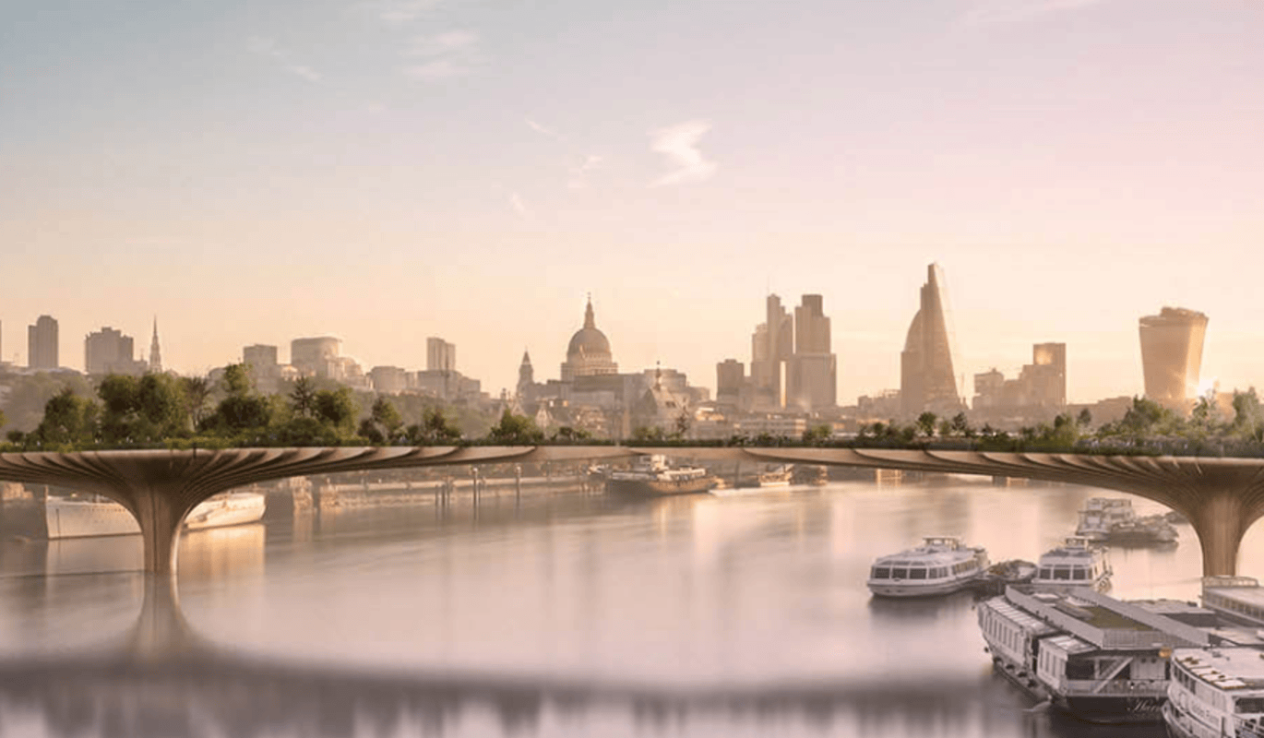
But if I could find £80m a year for bridges in London would that sound good to you? It would be enough to fund the refurbishment of Hammersmith Bridge in three years and pay for the Garden Bridge in four years. The money wouldn’t come from taxation, nor would it need to be repaid. In fact, it’s from a fund specifically set up for this purpose.
That fund is called the City Bridge Foundation (CBF). Its origins go back over 1,000 years, and its Royal Charter dates from 1282, when it was established to collect tolls and maintain London Bridge.
As the nursery rhyme goes, London Bridge was always falling down, and so the fund also needed money on hand to rebuild when necessary. It did this on multiple occasions, most recently in the 1970s. This requirement meant the foundation built up a substantial endowment over the centuries from tolls, taxes and bequests. In 1524, for example, former London Mayor George Monoux left the fund a brewery.
The foundation then used this money to fund the building and maintenance of Blackfriars Bridge, Southwark Bridge, Tower Bridge and the Millennium Bridge.
In 1995, though, everything changed. The foundation applied to get its charter altered, and the government agreed. Now the foundation no longer had to use excess funds for building bridges, but could instead use them for charitable donations. Since 1995, it has handed out £760m.
Good causes?
Some of these charities are unambiguously good causes, like charities that help survivors of sexual violence. However, others are more contentious. CBF is committed to the pursuit of both DEI and tackling the “climate emergency”, and states that “our cross-cutting strategic ambitions of Equity, Diversity and Inclusion and Climate Action are fundamental to everything we do”.
According to the CBF website, the foundation is committed to being an “anti-racist organisation” and “using our power and networks to advance EDI”. Its funding principles include: “Equity is at the heart of our grant making and we only fund work which can demonstrate expertise in this area or a strong desire to improve (as part of the funded work itself)”. Unsurprisingly, then, nearly every donation has a woke tilt. Donations to charities for archaeology are for “inclusive courses”. Sports charities cater to “minoritized communities”.
Since 2021, CBF has also been a signatory to the Funder Commitment on Climate Change, which requires it to “commit resources to accelerate work that addresses the causes and impacts of climate change”. Yet its commitments to climate action are in tension with keeping traffic flowing across the capital’s river crossings, given the emissions now associated with such traffic. Indeed, in at least one case, CBF has funded a group which campaigned to restrict traffic across the Thames.
Its commitments to climate action are in tension with keeping traffic flowing across the capital’s river crossings, given the emissions now associated with such traffic. Indeed, in at least one case, CBF has funded a group which campaigned to restrict traffic across the Thames
CBF is a long-time partner and backer of London Funders, which in November 2022 created the Propel initiative to tackle inequality among disadvantaged groups. In 2023, CBF gave a grant via Propel to the charity Queercircle, perhaps unaware of its recent backing for a campaign against the latest Thames crossing.
In 2022, alongside an exhibition called Tunnel Visions, Queercircle collaborated with Stop the Silvertown Tunnel Coalition, a Nimby group, on a series of workshops and events. The coalition was originally set up to oppose the Silvertown project, and in 2022 it was still lobbying to stop cars and heavy goods vehicles from using the tunnel. Queercircle was reported as helping “empower local people to take action”.
There’s no evidence that CBF was aware that its funds supported a group that opposed a new river crossing for London. But it shows how its remit has been expanded so far that its funds can now end up supporting groups who are at odds with the fund’s original goals.
The Silvertown tunnel is finally open, no thanks to the Nimbys who stood in its way for more than 20 years. This should be a moment to review whether there is a better way to build the river crossings London still needs. CBF is owned and controlled by the City of London, and they could request that the government change its charter back, so that most or all of its excess funds be spent on more bridges for London, as the donors intended.
As of 2023/24 the CBF has £801m in investment properties and £803m in financial investments. This produced income for £60m of charitable donations in 2022/23 and £83m in 2023/24.
I’ve mentioned the Garden Bridge and Hammersmith Bridge, but there are plenty of other projects that need funding. A bridge to replace the Woolwich ferry and link the North and South Circulars was proposed by Ken Livingstone, but dropped due to cost. That would be expensive, but the foundation could also fund it by collecting the tolls as it did in the past.
Essayist Ed West has also suggested building a replica of Old London Bridge – the one with all the beautiful overhanging buildings. Not only would this be one of the most wonderful tourist attractions in the world, but the rent from shops, restaurants and hotels would bring in millions of pounds in income. Perhaps some of that could be used to support London’s charities – once the bridge is actually built.
I started by making fun of the cynic who says that you can never please everybody but he is, unfortunately, right. We can have more bridges, without extra tax, that will grow our economy and brighten our lives, or the charity established to keep traffic moving over the Thames can continue to support the kind of groups that want that traffic restricted.
John Murphy is a Morrisons’ delivery driver and citizen journalist