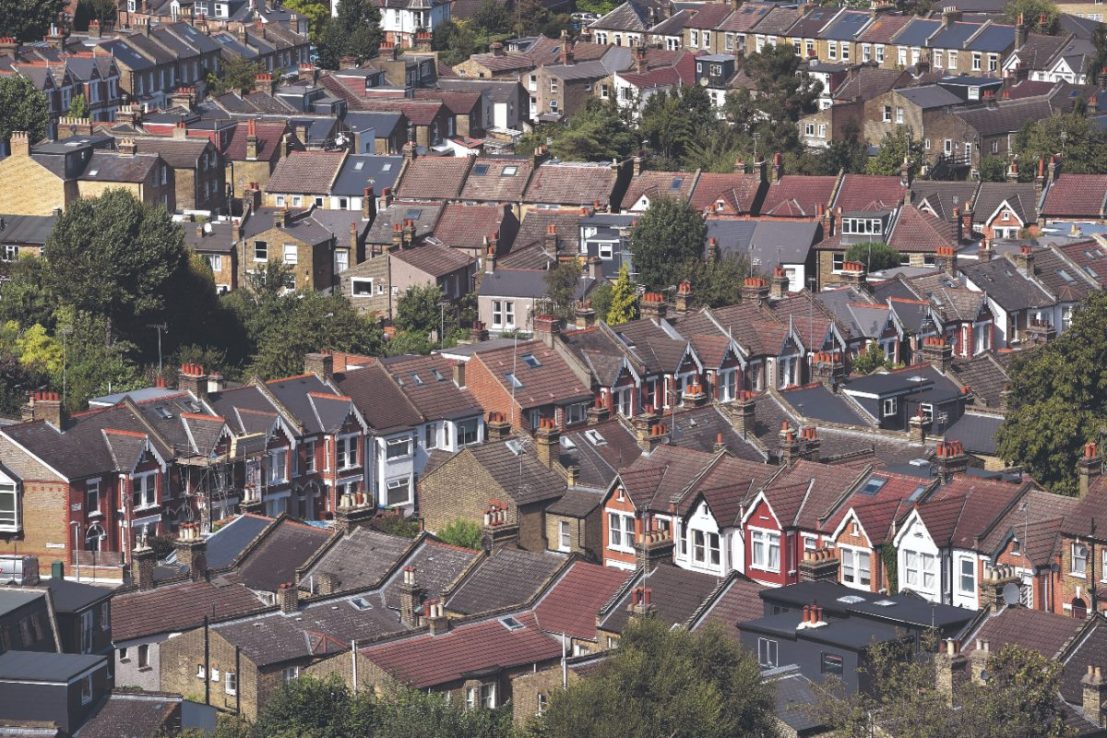
London homeowners are most likely to make a loss upon selling their house as prices in the capital continue to drop.
In 2025, nearly 15 per cent of Londoners sold their home for less than they bought it, the highest proportion in England and Wales, according to analysis from real estate agent Hamptons, well above the national average of 8.7 per cent.
The UK capital also knocked the North East off from the top spot which it has held for the last nine years, with only 13.9 per cent of sellers losing money, down from the 29.9 per cent recorded in 2019.
The shift comes as the North East continues to see boosted returns on sales, with the region having the highest annual growth rate in 2025 as property prices rose to £181,798, according to Halifax.
In contrast, London house prices fell 1.3 per cent over the course of 2025, averaging £539,086 but remain the most expensive in the UK.
London no longer like it seems
The trend has been primarily driven by flats, which despite accounting for 60 per cent of London sales last year, represented 90 per cent of homes sold at a loss, up from 78.4 per cent reported in 2019.
Aneisha Beveridge, head of research at Hamptons, said: “In London, upward house price growth is no longer the one-way bet it once seemed.
“In some cases, even owners who bought a decade ago still face getting back less than they paid, something that would have been almost unthinkable in the heady days of 2015. And for many, the sums are likely to remain tight.
“Over the next few years, more sellers are likely to have missed out on London’s 2012-16 house price boom, having bought instead at what turned out to be the top of the market. That could make trading up increasingly challenging.”
Local authorities and long term ownership
London’s local authorities also saw a significant number of sellers make a loss in profit on their properties.
Nearly 30 per cent of residents in Tower Hamlets made a loss, the highest figure in both the capital and the country, closely followed by the City of London where 26.2 per cent of sellers lost revenue.
In Hammersmith and Fulham, Kensington and Chelsea and Westminster more than a fifth of sellers made a loss last year, while London’s cheapest borough, Barking and Dagenham, reported 5.3 per cent of residents selling below purchasing price.
While the average London seller in 2025 achieved a price of £172,510 above what was originally paid, this mostly stemmed from historic price growth, with over half of London sellers last year owning their home for over a decade.
In cash terms, long-term home owners accounted for 77 per cent of total gains in the capital, with home owners also generating higher gains than flat owners.
London house sellers were more than six times less likely than flat sellers to make a loss, making it increasingly harder for flat owners to make the jump to owning a house, due to the likelihood of failing to make a profit.
Northern rise and national picture
The ongoing sustained levels of house price growth across the Northern regions in the last decade has caused sellers to see proportionally higher gains than their Southern counterparts.
In 2025, the average North West seller achieved a 45.4 per cent increase in value of their home during ownership, above both London and the South East, at 44.6 per cent and 38.3 per cent respectively.
Only London broke the 40 per cent gains threshold in the South.
This change has made sellers in the Midlands and the North the least likely to make a loss upon selling.
Nationally, the average sales price remained similar to that of 2024, with homeowners in England and Wales selling for £91,260, just £570 less than the prior year.
Beveridge noted the recent slowdown in national house price growth, which many industry figures pinned to Autumn Budget uncertainty and a rise in housing stock, is “likely to reduce the uplift home owners come to achieve” when they opt to sell in the coming years.
Beveridge said: “If the numbers don’t stack up, and sellers risk losing part of their original deposit, many choose to stay put.
“This means some homeowners, particularly those unable to secure a gain, are likely to remain out of the market.”