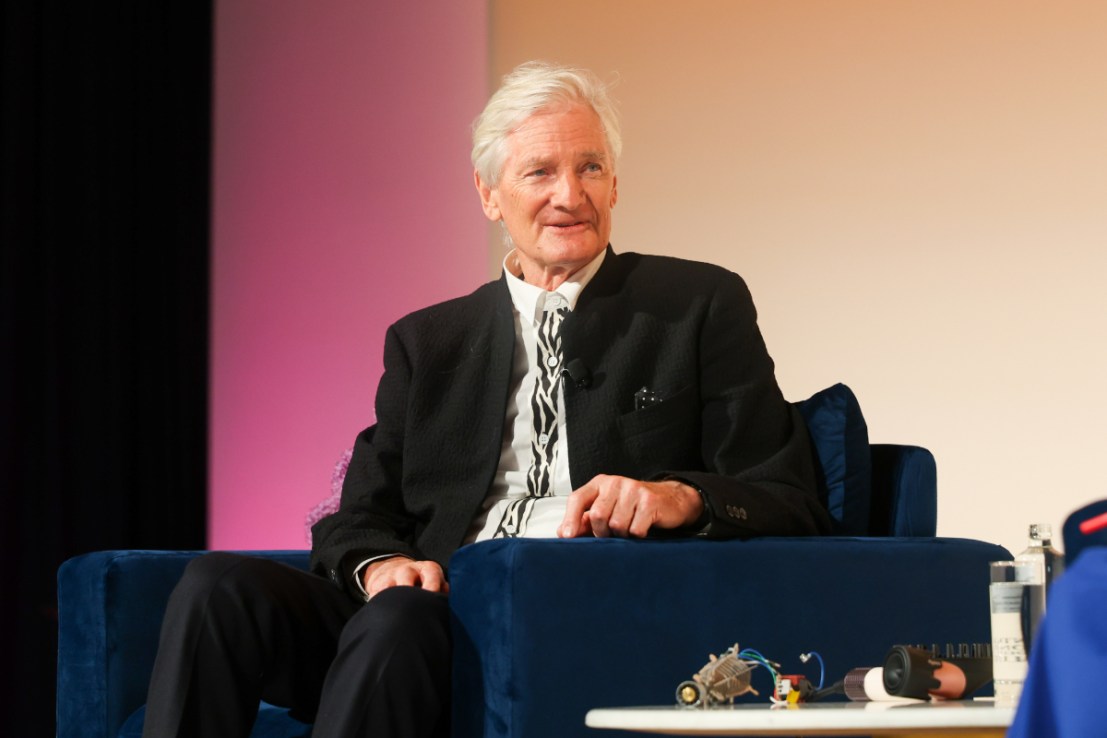
The government’s controversial plans to apply inheritance tax on family businesses would leave Dyson “unrecognisable” after its eponymous founder’s death and force his family to sell off part or all of the business, the entrepreneur has said.
Speaking to Radio 4’s Today programme, Sir James Dyson warned the consumer electronics giant will be unable to foot what promises to be a multi-billion-pound tax bill on his death, meaning his family will “have to sell the business”.
“Companies are valued on a multiple of their earnings,” he said. “So if you’re paying 40 per cent of a multiple of your earnings, that’s billions in my case. We haven’t got billions of cash… so you have to sell the business to pay it.
“A company has no value. There’s no assets that you can sell. Its value is a multiple of its profits. So it’s paper money. You simply don’t have [it].”
At its maiden Budget last year, the government ended two decades-old carveouts from inheritance tax – known as Agricultural Property Relief and Business Asset Disposal Relief – that allowed farmland and family businesses to be transferred down a generation tax-free.
In a major crackdown that sparked a wave of protests across the country, the Chancellor chose to restrict any relief to the first £1m of estates’ agricultural or commercial property, arguing wealthy land and business owners had used them as a means to avoid paying the levy.
Comments come despite inheritance tax u-turn
This month, ministers unveiled a partial U-turn on the crackdown, raising the threshold to £2.5m. But asked whether the original reforms had meant there was a “danger that Dyson stops being Dyson” after his death, Sir James said: “Yes. You cannot pay that tax.”
Dyson issued the inheritance tax broadside on a broadcast of Today that he had guest-edited, during which he also urged ministers to dial up efforts to harness Britain’s manufacturing potential. The entrepreneur, who founded his household appliance giant in 1991, warned that the UK was no longer keen on “making things” and we have “lost our interest in engineering and manufacturing”.
“Manufacturing has declined and it’s that decline that I’m worried about,” he said. “We need to make things. We need to export goods. We need to export something. I’m very simple about economics – it’s a balance of payments, so if you’re bringing in more than you’re shipping out, you’re in trouble and you’re going to decline.”
Dyson began moving his company’s manufacturing operations from the UK to Singapore in 2002, before shifting its headquarters and his personal residency to the east Asian city-state in 2019. At the time, he was heavily criticised for moving thousands of high-skilled jobs abroad and focusing investment elsewhere. The entrepreneur, who was among the most prominent business backers of Britain’s departure from the European Union, was also accused of abandoning the UK after the referendum result.
But Dyson told the BBC that believing those accusations is to misunderstand his motives. He said he “tried very hard to make things in England”, but a combination of prohibitive planning laws and local supply chains forced his firm to move abroad.
“We were manufacturing in Britain at a state-of-the-art factory in Wiltshire, and I was making 500,000 machines a year,” he said. “I was growing fast, so I applied for planning permission. It takes about two years to do that, and I was refused.”
He added: “It just so happened there were empty factories [in Singapore]… and I could move there very quickly and start my production there. I now make 25m machines a year. That’s 50 times what I was making in that quite large factory that you saw at Malmesbury. I couldn’t have possibly done that in England, and I didn’t have the suppliers in England.”