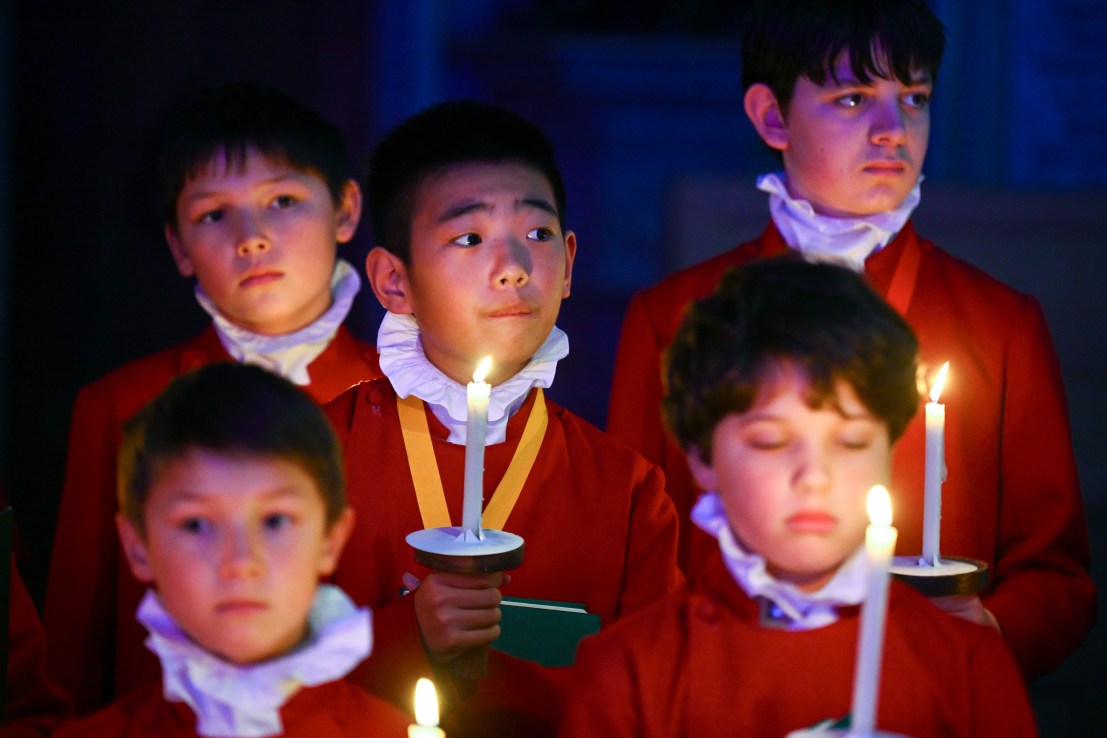
Britain’s Christian-inspired identity – its heritage and traditions – should be promoted and celebrated, not cast aside by those who preach inclusivity but fail to practice it. Indeed, it could be the key to fostering a more stable, cohesive, and prosperous society, says Rakib Ehsan
With a teacher being banned from working with children after telling a Muslim child that “Britain is still a Christian state”, an important question needs to be asked: does Christianity even have a place under the UK’s model of state-sponsored multiculturalism?
Not only was the primary school teacher referred to his local child protection board over the comments he made to the pupil at a London-based school, a senior detective from the Metropolitan Police’s child abuse investigation team became involved. While it could be argued that the teacher was a tad forceful and overexuberant, the case has understandably triggered concerns among those who believe that child-protection laws are being exploited to suppress culturally ‘unfashionable’ views which defy modern multicultural dogma.
British Muslim academic Dr Usama Hasan claimed that “British has been a post-Christian country for decades”. There is no doubt that there has been a sharp decline in Christian identification. In the 2001 England and Wales Census, more than seven in ten residents identified as Christian (72 per cent) – this had dropped to well under half of the general population in the 2021 edition (46 per cent). This is not because of mass immigration, but rather the rapid secularisation of the white-British mainstream. In fact, in many parts of London and my hometown of Luton, churches are being rejuvenated by migrants from Africa, Asia and Central/Eastern Europe. As British-Nigerian writer Tomiwa Owolade put it: “If you want a solid sense of the sacred, a connection to Britain’s ancient Christian past, you are more likely to find it while eating jollof rice in a big tent in Kennington than eating a Yorkshire pudding in a small room in Harrogate”.
Post-Christian?
But labelling Britain as a post-Christian state serves to ignore its constitutional architecture, cultural heritage, and the fact that Christians remain the largest faith group in modern Britain. While one may quite rightly have concerns over the recent direction of the Church of England (CofE), the country nevertheless has an established church of which King Charles III – the current head of state – is the Supreme Governor. One cannot have a fully-rounded understanding of English culture – literature, music, architecture and the arts – without a degree of familiarity with Christianity. Professor Dawkins, author of books such as “The God Delusion”, once said: “You can’t appreciate English literature unless you are steeped to some extent in the King James Bible”. While Christianity has been traditionally associated with the politics of the Right, Morgan Phillips – General Secretary of the Labour Party from 1944 to 1961 – declared that his party owed “more to Methodism than Marxism”.
In an era of fast-paced secularisation and materialistic individualism, I would welcome a Christian revival in England – one that involves a wholesome appreciation of family bonds and community spirit under an overarching devotion to God
In an era of fast-paced secularisation and materialistic individualism, I would welcome a Christian revival in England – one that involves a wholesome appreciation of family bonds and community spirit under an overarching devotion to God. Indeed, the data suggests that many British Muslims may well welcome such a development, as opposed to viewing it as a threat. A landmark report published last year by the Institute for the Impact of Faith in Life found that more than three in five British Muslims (63 per cent) were of the view that overall, most people in Britain put their individual interests above the needs of their family members and the wider community.
Britain’s Christian-inspired identity – its heritage and traditions – should be promoted and celebrated, not cast aside by those who preach inclusivity but fail to practice it. Indeed, it could be the key to fostering a more stable, cohesive, and prosperous society.
Dr Rakib Ehsan is an academic specialising in matters of race, faith and identity